Allulose

Low Calorie Sugar

  • Allulose, a low calorie sugar
  • ALLULOSE INFO
    • What is Allulose?
    • Where To Find Allulose
    • Frequently Asked Questions
  • CONSUMERS
    • Why Choose Allulose?
    • Health & Wellness
      • Dietary Restrictions
      • Weight Loss
      • How to Read the Label
      • Resources
  • FOOD SCIENTISTS
  • HEALTH PROFESSIONALS
    • Latest Science
      • FDA GRAS
      • Glycemic Index Overview
      • Metabolism Overview
      • Gastrointestinal (GI) Tolerance
  • NEWS
    • Allulose Articles
    • Allulose In The News
  • CONTACT US
  • Español

Finding the Sweet Spot: Reducing Calories Without Sacrificing Consumer Acceptance — Natural Product Insider

April 24, 2017 by Stan Samples

As obesity rates continue to climb in the United States, the food and beverage industry is actively creating more choices for consumers to meet their health goals of reducing sugar and calorie intake. While many Americans claim to want healthier foods and beverages, they will not trade taste for calorie reduction. Among the consumers who say they are consuming foods and beverages with low-calorie sweeteners, nearly half (48 percent) do so to help reduce overall calorie consumption. However, when asked what factors impact their food purchase decisions, 84 percent agree taste is at the top of their list, followed by price and healthfulness, respectively.

Allulose, a low-calorie sweetening ingredient, provides the full taste and enjoyment of sugar but without all the calories. Unlike stevia and monk fruit or artificial sweeteners, allulose is not a high-potency sweetener. Allulose is 70 percent as sweet as sucrose and has the same temporal profile as sucrose, unlike other zero- or low-calorie alternatives available. Formulating with allulose makes it easier for food and beverage manufacturers because it delivers many of the benefits that sucrose offers beyond just sweetness.
Continue Reading at Natural Product Insider

Filed Under: News

Ice cream makers struggle to find low-sugar option — Food Dive

April 20, 2017 by Stan Samples

Nearly 60% of Americans are trying to cut down on sugar, according to a recent Reuters/Ipsos poll – more than those targeting lower calories, sodium, fats, carbohydrates or cholesterol. Just 39% of respondents said they did not intend to reduce their sugar intake, so it’s a natural move for heavy sugar users like ice cream makers to look at other options. A Mintel’s 2017 report on things to come in the industry listed the top trend to be backlash against sugar, so it’s an issue that consumers are already starting to think about.

Some dairy dessert makers choose to target fewer calories, rather than clean label ingredients, in their effort to strike a balance between health and indulgence with low-calorie sweeteners are still proving popular. Allulose has a similar mouthfeel to sugar at 70% of its sweetness and without the calories. Meanwhile, parallel advances in bulking agents, including inulin, oligosaccharides and various hydrocolloids, have helped add back the texture and mouthfeel that is often lost when sugar is removed.

Continue Reading at Food Dive

Filed Under: News

Promoting a Balanced Diet to Consumers

March 27, 2017 by Stan Samples

iStock_000015578141_LargeBy: Carolyn Reynaud, MS, RD, LD —

Following March’s National Nutrition Month now is a great opportunity for dietitians and health professionals to engage with consumers and clients in ways that help them balance their diet utilizing the most up-to-date guidelines. Health professionals and dietitians already know that a balanced diet is the keystone of optimal nutrition that supports a wide variety of benefits, such as a reduction in disease risk, weight management and improved quality of life. A proper diet even has the potential power to override genetics. However, for average Americans, this is not always common knowledge.

The Dietary Guidelines for Americans (DGAs) is the ultimate guide for what constitutes a balanced diet and the recent edition published in 2015 brought about many shifts to create recommendations that are better tailored to helping the individual succeed. This shift in guidance will help individuals achieve healthy eating patterns.

One recommendation of the DGAs (that is a mainstay and has not changed) is the guidance of eating a diet heavy in fruit and vegetables. Unfortunately, this is an area in which Americans continue to do poorly.  Using 2013 data from the Behavioral Risk Factor Surveillance System (BRFSS), the Center for Disease Control (CDC) found that 76 percent of Americans surveyed did not meet fruit intake recommendations, and 87 percent did not meet vegetable intake recommendations. This means one out 10 Americans is not getting an adequate amount of fruits and veggies.

As health professionals, we have to do better job with our clients in discussing and strategizing how to integrate a variety of fruits and veggies in their diets. (Note: The Academy Of Nutrition and Dietetics (AND) shared a great hand out, linked here, that you can use with clients on ideas on how to meet the fruit and vegetable recommendations.)

“Variety” is a word you will see showcased frequently in recommendations for creating a well-rounded diet. While eating a diet that includes all the food groups such as fruit/veggies, grains, dairy and protein, it is important to stress that people should be varied in their intake within the individual groups to meet DGA recommendations.

The popularity of high protein diets is a good study on how variety can be used by the consumer to meet recommendations within a preferred diet. A client that feels higher protein is a good fit for them may be at risk for a diet with nutritional deficiencies if they are focused solely on animal protein. As dietitians we should try to educate clients on how they can also utilize plant and seafood protein as an alternative to help keep saturated fat under the recommended 10 percent of calories. Plant and seafood options are also provide beneficial nutrients like fiber and omega-3.

There is also a big focus in the DGA on substituting energy dense foods with nutrient dense foods. The recommendation is to limit saturated fat, salt and added sugars by replacing foods high in these ingredients with healthier options. One step taken to support this change is putting a quantifiable number on suggested added sugar intake.  Added sugars have been a hot topic in nutrition for a while now and we are seeing a big push to reduce the amount in our diets.

Health professionals need to focus on empowering clients to be able navigate the world of added sugars in light of these changes. Tools like food calorie calculators, AND’s article on reading nutrition labels and this handout on reducing sugar intake are good examples of resources we can provide.

Finally, while reducing excess sugar is the goal, sustainability is also a key factor. This is where low- and reduced-calorie sweeteners/sugars can be helpful. The use of these products has been deemed safe and is supported by many reputable health agencies. There are a variety product options available of low/no-cal sweeteners that consumers can use as an alternative to sugar. We also see a variety of food manufacturers that are using low-calorie sweeteners in their products to meet consumer needs. Allulose is one such sweetener that is emerging on the market with a taste comparable to sugar. Keep your eyes open for more foods and beverages containing allulose in the near future.

Most importantly – we are lucky to have a growing body of information, resources and innovations that we can use to help people create their best and sustainable balanced diet.

creynaud-150x150Carolyn Reynaud, MS, RD, LD is a licensed registered dietitian and a paid contributor to Allulose.org. She received her BS in nutrition from Michigan State University and her Masters and Certificate in Public Health from Georgia State University. She has experience working in several avenues of health care including corporate wellness, clinical disease management, research, and health promotion. She has been working as a health coach specialist for close to 6 years, where she counsels patients on preventative healthcare and helps them meet their health goals. Follow her on Twitter @ReynaudCari.

Filed Under: Articles, Health Professionals

Be on the Lookout for Allulose

January 23, 2017 by Stan Samples

By: Jen Haugen, RDN, LD

For the first time since the 1990’s, major changes are coming to the Nutrition Facts Panel, and one of the major changes is the new notation of added sugars.  Americans continue to struggle with overweight and obesity, and added sugars have become a target since they tend to provide excess calories which can contribute to excess weight.  This is where low calorie sweeteners can make a difference; however, while making food still taste good without the extra added sugar calories.  And there’s a new low calorie sweetener on the market, allulose.

Allulose has recently achieved GRAS status, “Generally Recognized as Safe,” by the US Food and Drug Administration (FDA).  What this means is that based on FDA guidance, people of all ages can enjoy allulose in moderate amounts.  However, while it’s not available as a stand-alone sweetener quite yet, you can find it as an ingredient in some foods on supermarket shelves.

Allulose has some great features which is why food manufacturers are interested in using it in their products. Untitled design (23) It has a similar texture and similar taste of sugar, but without all the calories of sugar, 90% less calories to be exact.  Allulose provides 0.2 to 0.4 calories per gram, compared to 4 calories per gram with table sugar.  It also has been found to have no effect on blood sugar.  This is because allulose is not recognized by the body as a carbohydrate and it is not metabolized as energy.

Allulose can be used to reduce or replace sugar in foods ranging from beverages, yogurt, and ice cream to baked desserts, candy, salad dressing, and even cereals.  Because allulose has 70% of the sweetening power of table sugar, it lends itself well to the browning that happens during baking and it works well in beverages.

A commercial manufacturer of allulose notes that the way allulose is manufactured is proprietary, though they do explain the process is part of corn processing.  The carbohydrate in corn goes through an enzymatic process to produce allulose.  You can find allulose naturally in jackfruit, figs, raisins, and wheat.  It’s also naturally present in foods like caramel sauce, maple syrup, and brown sugar.

At the moment, the FDA requires allulose, known as a low calorie sugar, to be labeled as part of the sugars on the Nutrition Facts Panel despite the fact that the calories are significantly less than regular sugar.  The low calorie nature of the sugar is linked to how 70 to 80% of the allulose is absorbed in the intestine, and is eventually excreted in the urine.  The other 20 to 30% passes into the large intestine, where it is then excreted.

Products available now that contain allulose:

  • Cereal Protein Bars, manufactured by QuestNutrition.
  • Bread Products, manufactured by Know Better Bread.

Look for future products that contain allulose in the following categories:

  • Beverages
  • Candies (both hard and soft)
  • Cereals
  • Chewing Gum
  • Confections and Frostings
  • Dressings for Salads
  • Frozen Dairy Desserts (ice cream, soft serve, sorbet)
  • Gelatins, Puddings, and Fillings
  • Jams and Jellies
  • Sugar
  • Sugar Substitutes
  • Sweet Sauces and Syrups
  • Yogurt and Frozen Yogurt

If you are interested in further information about allulose, refer to the website, www.allulose.org.

jenhaugen1-e1406904523734-150x150An award-winning dietitian, Jen Haugen, RDN, LD, is a paid contributor on Allulose.org and the author of the new book, “The Mom’s Guide to a Nourishing Garden.”  Jen specializes in inspiring moms to create the recipe to a nourishing life through gardening, good food, family, and faith. Her TEDx Talk, “How Moms Can Change the World”, features two simple ideas that can transform a family. Connect with her at www.jenhaugen.com or on Twitter @jenhaugen.

Filed Under: Articles

Allulose: A Multi-Functional Low-Calorie Sugar

October 6, 2016 by Stan Samples


As manufacturers look towards reformulating to reduce sugar in sweetened products to align with the latest U.S. Department of Agriculture (USDA) Dietary Guidelines recommendations for sugar intake, some are looking to allulose as a sweetener.

What is allulose?
Allulose, also known as D-psicose, is an epimer of fructose with the same molecular formula as glucose and fructose. What sets allulose apart from a typical sugar substitute is its negligible caloric value of approximately 0.2kcal/g compared to 4kcal/g of table sugar (sucrose). Additionally, it is not metabolized by the body and has no impact on blood glucose.

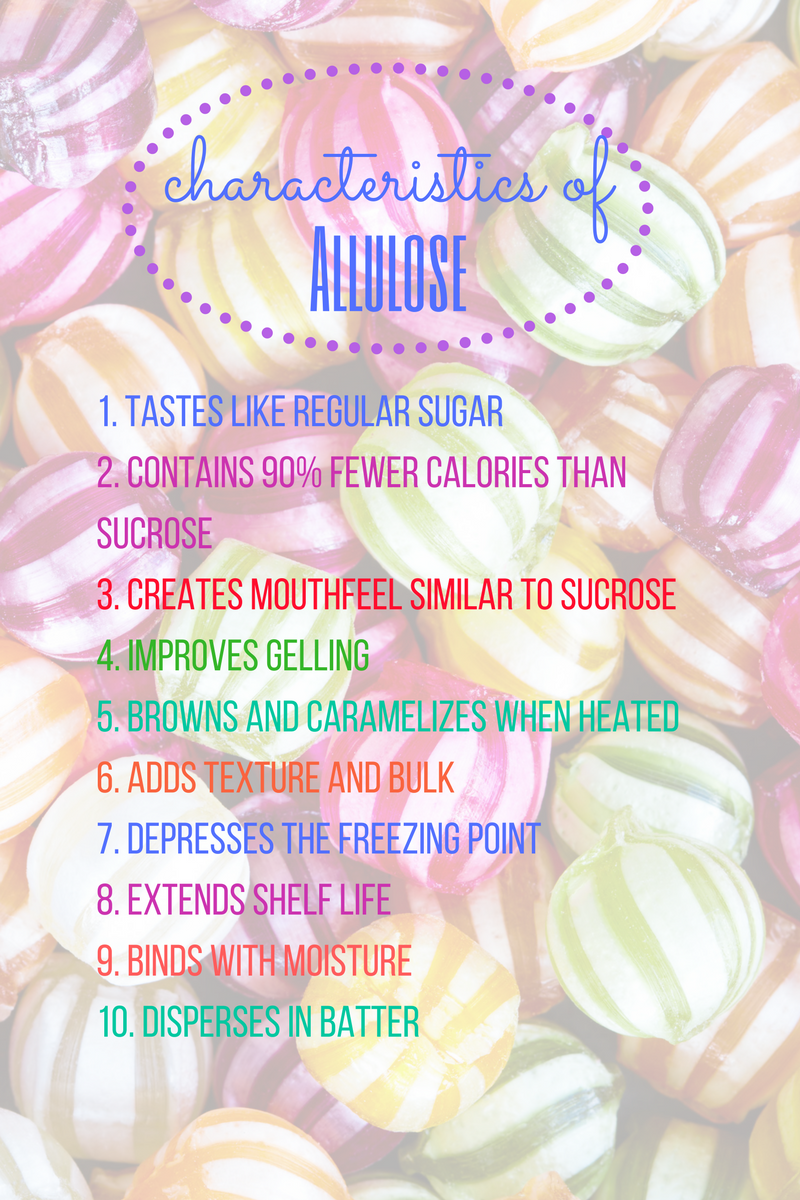
What is its source? 10-characteristics-of-allulose
As a naturally occurring substance, allulose can be found in small quantities in jackfruit, figs, raisins and other sources. Because allulose is a rare sugar, harvesting from natural sources would not be feasible to meet the demands of the food industry. Commercially produced allulose is developed through biological production under optimal pH (7.5 to 9.0) and temperature (40-60˚ C) conditions for successful enzymatic conversion of fructose to allulose in mass quantities.

What are its characteristics?
With a taste profile at 70% the sweetness of sucrose, it is comparable in texture and bulk, making it well-suited for low calorie substitution. Since allulose is not as sweet as sucrose, larger quantities are needed to achieve the same level of sweetness. Alternatively, allulose can be used when combining sweeteners, such as sucralose or stevia, to achieve the desired sweetness and mouthfeel sweetener properties without adding calories.

Research has found that allulose is highly soluble (Fukada et al. 2010), can improve gelling in certain food products (Sun and Hayakawa 2004), and browns like sugar when heated, achieving desired textures and appearances in various applications. Addition of allulose also depresses the product’s freezing point, which makes it useful for frozen desserts.

What applications are approved for use?
Allulose is generally recognized as safe (GRAS) for all ages by the US Food and Drug Administration (FDA). It is recognized for use as a flavor modifier in various food and beverage applications including: low or reduced calorie bakery products, alcoholic beverages, soft drinks, fruit juice and fruit flavored drinks, yogurt, frozen dairy desserts, hard and soft candies, chocolate, chewing gum, coffee mix, sauce, fat-based creams, nutrition bars, meal replacement shakes, medical foods, and sugar substitutes.

With such versatility, it’s no surprise that allulose has the potential to make major waves in the food industry as a non-nutritive sweetener.


Fukada K, Ishii T, Tanaka K, Yamaji M, Yamaoka Y, Kobashi K, Izumori K (2010) Crystal structure, solubility, and mutarotation of the rare monosaccharide D-psicose. Bull Chem Soc Jpn 83:1193–1197.
Sun Y, Hayakawa S, Izumori K (2004) Antioxidative activity and gelling rheological properties of dried egg white glycated with a rare keto-hexose through the Maillard reaction. J Food Sci 69:C427–C434.

Filed Under: Articles

  • « Previous Page
  • 1
  • …
  • 7
  • 8
  • 9
  • 10
  • 11
  • 12
  • Next Page »

Frequently Asked Questions

You may have questions about allulose. Read more about this low calorie sugar.
Learn More

Articles

Brain Activity & Connectivity Changes: Response to Natural Sugar Replacements & Artificial Sweeteners – Nutritional Neuroscience

ARTICLE: Brain activity and connectivity changes in response to nutritive natural sugars, non-nutritive natural sugar replacements … [Read More...]

Choose Your Calories by the Company They Keep

By Neva Cochran, MS, RDN, LD  You will often hear that controlling your weight is simply a matter of “calories in vs. … [Read More...]

Embracing Change in the Food Industry: New Ingredients Reflect Emerging Nutrition Science

It’s often said that the only constant in life is change, and this holds especially true for the food industry. In fact, sources … [Read More...]

The Calorie Control Council, a non-profit association established in 1966, seeks to provide an objective channel of scientific-based communications about low-calorie foods and beverages, to assure that scientific and consumer research and information is made available to all interested parties.

Important Notice: This site is designed primarily as an educational resource. It is not intended to provide medical advice on personal health matters or to guide treatment -- which is only appropriately done by a qualified health professional. Permission to reprint information in whole or in part contained on this site is granted, provided customary credit is given. Copyright © 2019 Calorie Control Council

Terms and Conditions of Use | Privacy Policy

Copyright © 2026 · Lifestyle Pro Theme on Genesis Framework · WordPress · Log in